Face Lifting Devices: The Technologies and What to Check
How RF, EMS, vacuum and red light combine in lifting devices, and the checks that separate a working device from a specification sheet.
February 4, 2026 · Updated April 11, 2026 · 3 min read
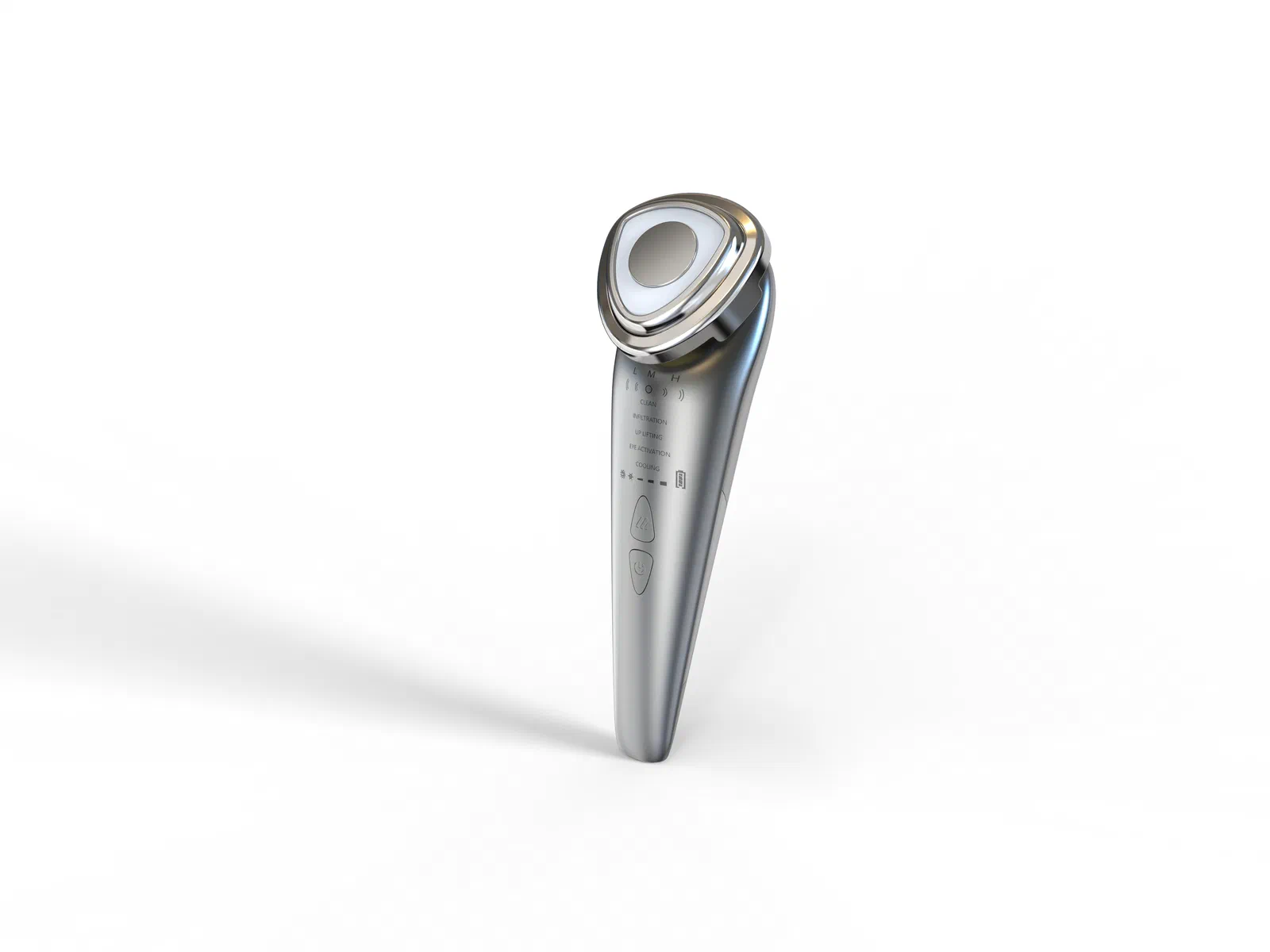
“Face lifting” is a marketing category, not a technology. Devices in it use one or more of four mechanisms, and the combination determines what the device can plausibly do — and what has to be written on the box.
This article covers the four, how they combine, and the specific checks worth making before committing to a product plan.
The four mechanisms
Radio frequency heats the dermis to stimulate a repair response. It is the mechanism most associated with firming claims, and the one with the widest gap between good and cheap implementations.
EMS produces visible muscle contraction. It is perceived as instant because the user sees movement, which is why it is used in devices that need to demonstrate effect quickly.
Vacuum suction lifts and mobilises tissue mechanically. It produces an immediate visible effect (redness, temporary plumping) and is often combined with RF or EMS to increase contact and perceived intensity.
Red light is used as an adjunct — phototherapy applied during a treatment session, usually at modest irradiance because the session is short.
| Mechanism | Primary claim it supports | Hard part |
|---|---|---|
| RF | Firming | Thermal control and safety cut-off |
| EMS | Contouring | Waveform and intensity steps |
| Vacuum | Lifting sensation, drainage | Sealing, pressure control, hygiene |
| Red light | Skin condition | Irradiance at the surface |
What combination actually changes
Combining mechanisms is not additive in the way the brochure implies. Two effects matter:
Contact quality improves for the energy modality. Vacuum pulls tissue into contact with the electrodes, which materially changes how much energy is delivered. This is a real engineering benefit, and it is why vacuum plus RF or EMS is common.
Thermal and pressure budgets interact. A device running suction and RF simultaneously has to manage heat in a housing that is also moving. This is where cheap combination devices fail — not in any single modality but in the interaction.
The checks that matter
Four questions, in order of usefulness:
- Is each mechanism’s output specified separately, in physical units? Frequency, kPa, mW/cm². A device that lists only mode names has not been characterised.
- What happens when two modalities run together? Ask for the thermal and pressure limits under simultaneous operation.
- What is the contact detection behaviour? With suction running, contact is easier to maintain and easier to fake — the device should know the difference between tissue and air.
- Which contraindications apply to each mechanism? Vacuum and RF both have them, and they are not the same list.
The fourth is where brands get exposed. A lifting device that combines vacuum and RF inherits the contraindications of both, and the manual has to say so.
Claims and the medical boundary
“Lifting” is a cosmetic claim. “Stimulates collagen” is closer to a medical claim depending on the market and the wording. Devices that imply treatment of a condition rather than improvement of appearance move into a different regulatory class.
The practical rule we apply: describe the mechanism, describe the sensation, avoid describing a physiological outcome that has not been measured on this device.
What we build
Our lifting platforms combine vacuum with EMS and red light, or RF with EMS and cooling, depending on the target price and claim. The facial device range covers both, and the V-face vacuum platform is the current example of the suction approach.
The session design problem
The hardest part of a lifting device is not the mechanism; it is the session. Lifting treatments are described in terms of minutes and repetitions, and a home device has to fit that protocol into a bathroom routine without supervision.
Three decisions follow from this:
Duration. A protocol that needs fifteen minutes will be followed for two weeks. A protocol of five to eight minutes has a chance of becoming a habit. If the mechanism needs longer, the product needs a reason for the user to keep going.
Guidance. Devices that pulse, beep or prompt at intervals produce noticeably better compliance than devices that rely on the user counting. This is firmware and a vibration motor, not new technology.
Progression. A device that starts at a fixed intensity either is too weak to matter or too strong to start with. Stepped programmes, with a clear first-week setting, are what make a device usable on day one and still useful on day thirty.
The session design also bounds the mechanism choice. Vacuum plus RF at high output for two minutes is a different product from the same combination at moderate output for eight — and the second one is usually the one that gets used.
Planning a lifting device? Tell us the claim and the market first. The mechanism, the bill of materials and the certification route all follow from that sentence, and getting it wrong is expensive to fix after tooling.